

Description
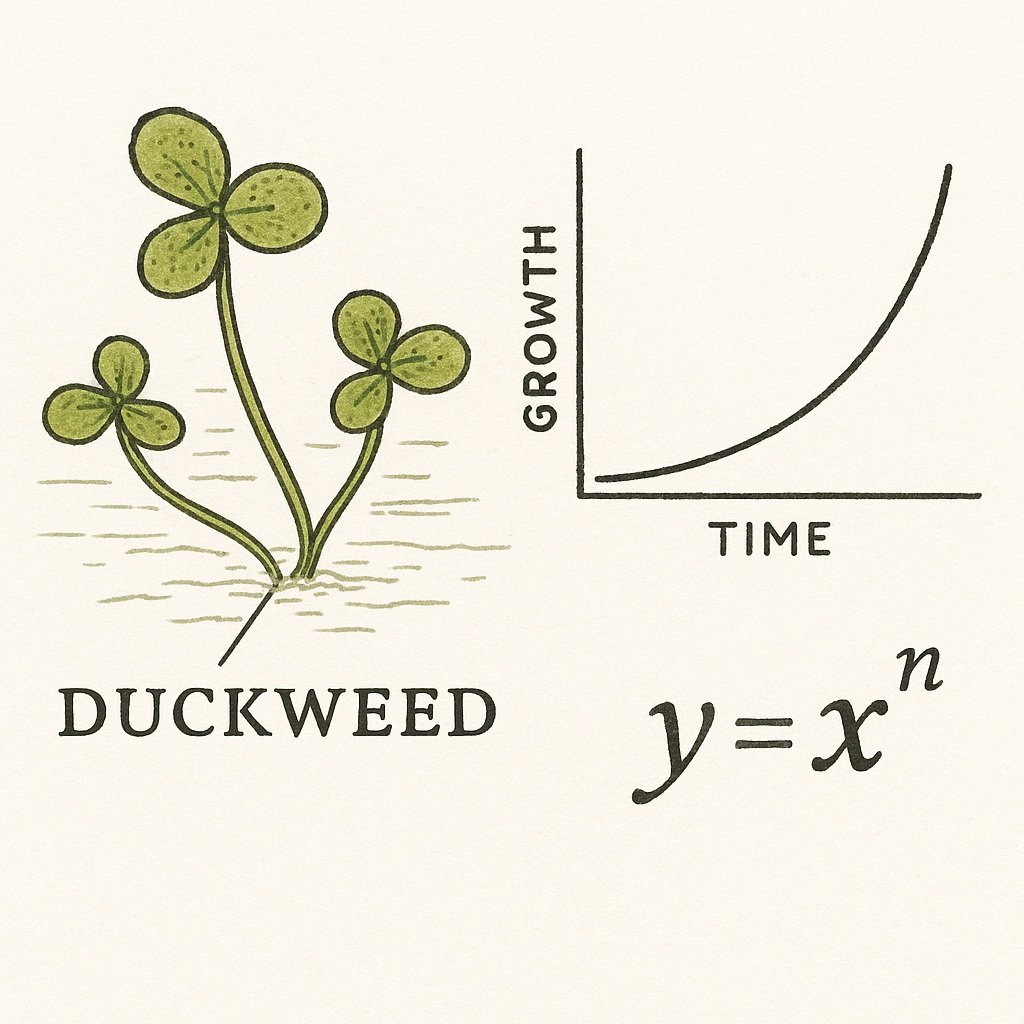
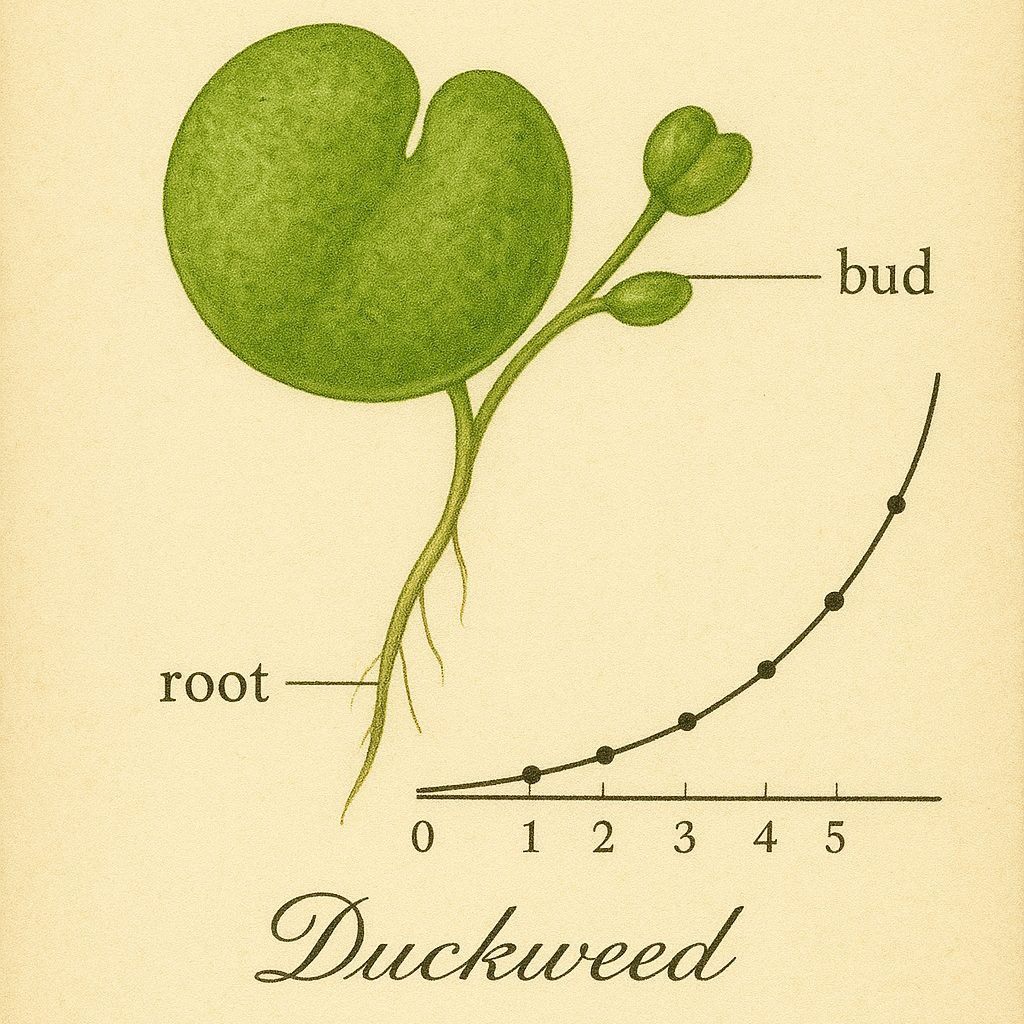
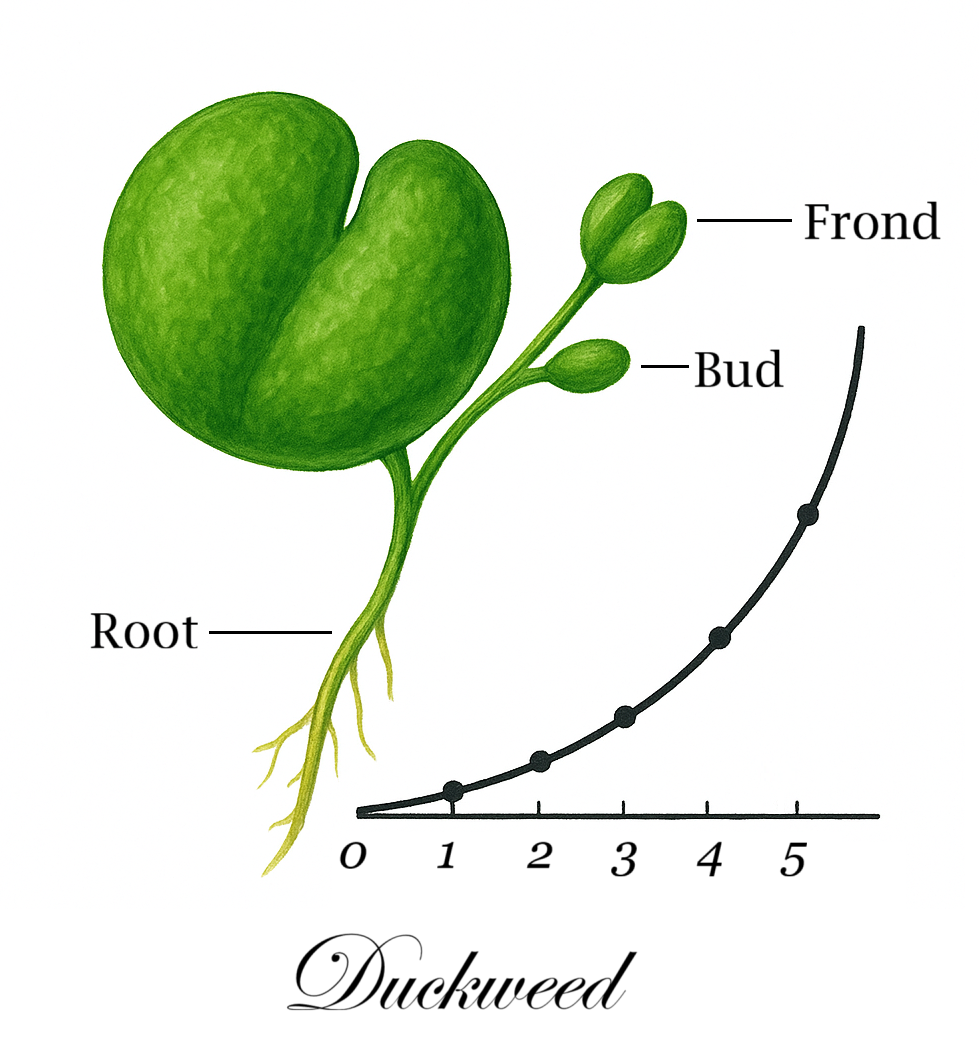
Many kids and adults (perhaps you!) struggle to understand exponential systems: ideas like compound growth or why something that “only grows a little each day” can suddenly grow very fast. This lab gives children early, hands-on experience with exponential growth by observing one of the fastest-growing plants in the world: duckweed.
By watching their duckweed multiply, taking pictures, counting new fronds (plants), and graphing the numbers, kids build an intuitive foundation — a sense that growth can speed up over time, not just increase little by little. Later, when they encounter exponential functions in mathematics, biology, personal finance, and so many other areas, they will already have a lived experience that the math simply “colors in” – that invaluable feeling of “I’ve seen this before!” Engaging with the concept in multiple forms: plants, counting, graphing, drawing, photos, is key in helping students get a feel for the concept. The TapRoot Series is about building an intuitive foundation for later excellence. It’s a fun approach that research strongly backs, and it’s the kind of small thing that really can make the difference between your child understanding their coursework, or just “copying the steps” and falling behind.
This study is simple, visual, inexpensive, and works at any learning level. Kids will:
- Set up a tiny duckweed ecosystem
- Observe each growth milestone
- Compare predictions to what actually happens
- Graph and record each growth stage
- Notice how growth changes over time (exponential!)
- Discuss the nature of this special kind of growth
Because this lab builds an intuitive basis for understanding, it can be repeated every 2-3 years to even further establish the foundation. We hope you enjoy it, and if it serves its purpose, you’ll be absorbing these lessons right alongside your learners and demonstrating the wonder of learning.